

Service
Web Design & Development
Stryx Collective designs and builds websites for businesses that need their site to bring in enquiries, bookings or sales. Every web design and development project starts with research into the business, its customers and its competitors, and the platform is chosen to fit the job. A typical project takes about 6 to 8 weeks.
Research before design
A website project at Stryx starts with discovery, before any design work. That covers:
- Aligning the site with your business goals
- Target audience analysis
- Keyword research
- Competitor analysis and market research
- Content gap analysis
- A review of the current user experience
- Technical requirements and feasibility
The structure, the content and the design all come out of that research, which is why no two Stryx sites look alike.
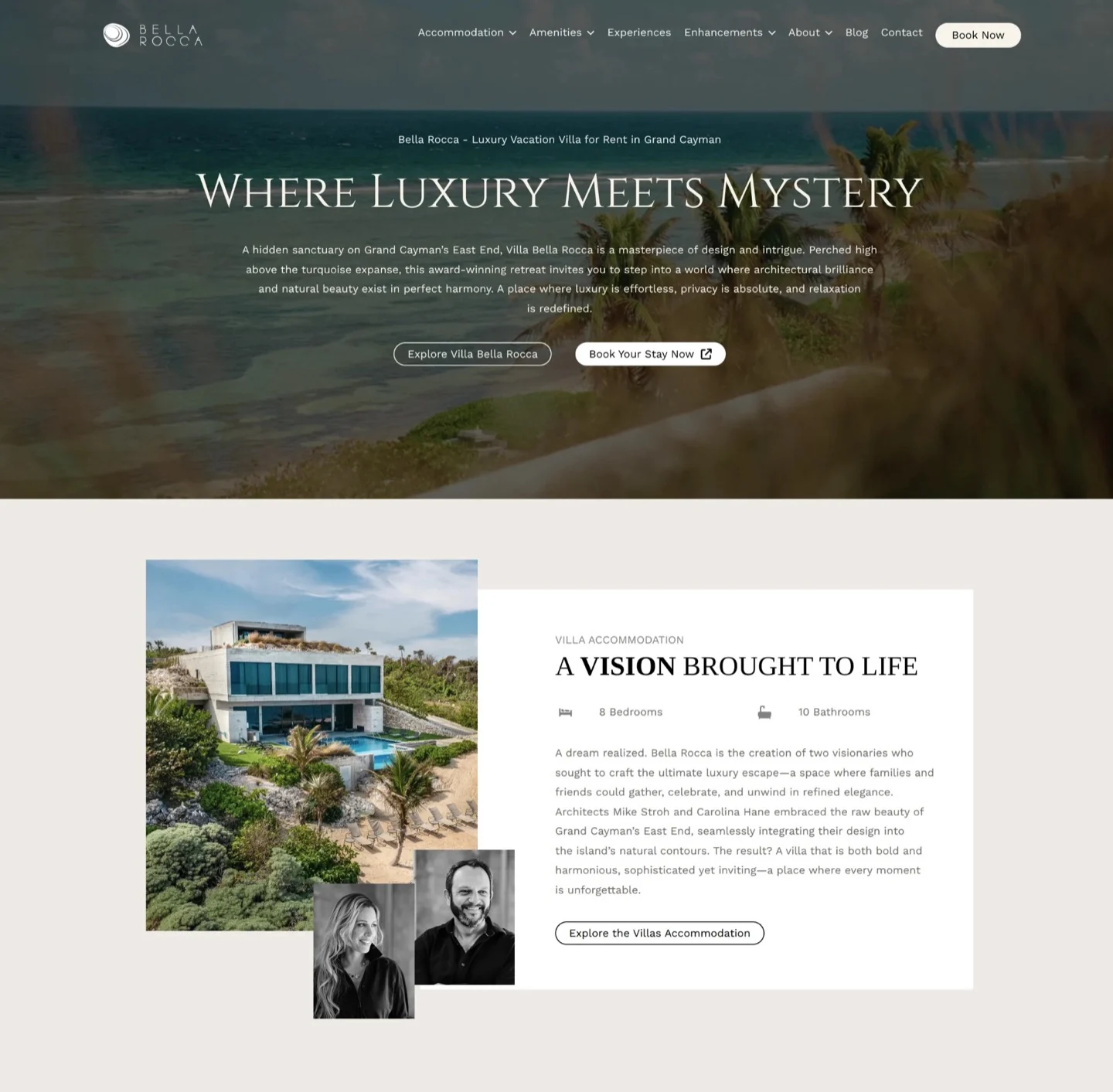
The platform is chosen to fit the job
Stryx is not tied to one tool. WordPress is the usual recommendation when a site needs to be dynamic and do more than show pages, such as a booking system, reservations or forms that have to be easy to customise. For some requirements WordPress is overkill, and sometimes another platform is the better choice, such as Shopify for e-commerce.
You get a recommendation with the reasons behind it, and it can change if your use case points somewhere else.
Built to be found
Search is part of the build. Keyword research happens in discovery, each page is planned around one topic so that pages do not compete with each other, and technical SEO is checked before launch.
Every site Stryx builds can be indexed by Google and other search engines on the day it launches. No one can honestly guarantee a ranking, and Stryx does not. Ongoing SEO is a separate service.
Built to be measured
A website should tell you what it is doing for the business. Before launch, you and Stryx agree what counts as a result, such as a booking, a call or an enquiry, and test that it is being recorded. Later decisions are then based on results and not on impressions.
Replacing an existing site
When a new site replaces an old one, or moves from another platform, the old URLs are mapped to the new structure early in the project and redirected at launch. That keeps the search visibility the old site had earned. See website redesign and website migration.
What you own
Once the project is paid in full, the website and the visual elements created for you are yours, to do with as you like. Source files for custom artwork are provided on request. Text, images and data you supplied stay yours throughout.
Open-source software such as WordPress, third-party plugins and licensed stock photos remain the property of their owners, and you use them under their licences.
Timeline and payment
- A typical website project takes about 6 to 8 weeks. Complexity, and how quickly content and feedback come back, move that in either direction.
- 50% is paid up front. That payment secures your place in the work queue.
- The remaining 50% is paid before launch.
- Changes to the agreed scope are quoted separately before any extra work is done.
Stryx starts a couple of new projects a month. Ask when the next opening is.
Testing and launch
Sites are built and tested on a staging server before they go live. They are designed for modern desktop, laptop and mobile screens, and tested in Edge, Firefox, Safari and Chrome on desktop, and in Safari and Chrome on mobile.
The launch checklist includes:
- Multi-device and functionality testing
- Performance optimisation
- SSL and DNS set-up
- Analytics, Google Tag Manager and conversion goals
- A redirect list for old URLs, where needed
- The sitemap submitted to Google
Good accessibility practice, such as considered colour choices and accessible interactive elements, is part of the design. If your site has to meet a specific accessibility or regulatory standard, say so at the start so it can be scoped into the project.
After launch
A bug that was in the build before launch is fixed at no extra charge. New features and changes are quoted or billed by the hour.
A website care plan covers hosting, backups, updates and content changes from launch day on, and project pricing assumes you take one.
Specific services
How it works
How a website project runs
Ryan Cumming runs the first call, plans the site and builds it.
You can follow the project in a client portal. When a stage needs your input, a task is assigned to you there.
The process can change to suit the project. Where it does, the changes are set out in your proposal.
- 01
Discovery
Business goals, target audience, keyword research, competitor and market research, content gaps, user experience and technical requirements.
- 02
Site architecture
A visual sitemap of every page and how the pages connect.
- 03
UX design
Wireframes that set the layout and flow of each page before any visual design.
- 04
Outlining and copywriting
Each page is outlined and its copy written.
- 05
UI design
The visual design, and a design system so the site stays consistent as it grows.
- 06
Development
A responsive build on a staging server, with performance, integrations and SEO best practice built in.
- 07
Launch
Browser and screen testing, image optimisation and technical SEO checks, then the site goes live on your domain.

What you get
Everything that's included
- Market, keyword and competitor research
- An opportunity report
- A visual sitemap
- UX wireframes
- UI design and a design system
- The built website, tested on staging
- Analytics and conversion tracking set up
- Redirects from old URLs, where the site replaces an existing one
- A handover document: where everything lives, how it is built and who has access
- Launch and post-launch support
Some of the 80+ businesses we work with




































Questions
Questions about Web Design & Development
Can't see yours? Ask Ryan directly and you'll get a straight answer, usually the same day.
Ask on WhatsAppHow long does a website take to build?
A typical website project takes about 6 to 8 weeks. Complexity, and how quickly content and feedback come back, can make it shorter or longer.
Do you only build in WordPress?
No. WordPress is the usual recommendation for sites that need custom functionality such as bookings, reservations or forms. Where another platform fits better, such as Shopify for e-commerce, Stryx recommends that.
Who owns the website when it is finished?
You do. Once the project is paid in full, the website and the visual elements created for you are yours.
How does payment work?
50% is paid up front and secures your place in the work queue. The remaining 50% is paid before launch.
Will my site rank on Google?
Every site Stryx builds can be indexed by search engines at launch. Rankings depend on many factors and no one can honestly guarantee them. Ongoing SEO is a separate service.
Will I lose my Google rankings if I rebuild my site?
Old URLs are mapped to the new structure and redirected at launch, which keeps the search visibility the old site had earned.
How do I keep track of the project?
You get a login to a client portal where you can see the stage the project is at and any tasks waiting on you.
What happens after launch?
Bugs that existed before launch are fixed at no extra charge. Hosting, backups, updates and content changes are covered by a website care plan.
Start a project
Be the business they find first
Tell Ryan what you sell and who buys it. You'll get a straight answer on what's holding your website back and what to fix first. There's no obligation to go ahead.
More enquiries you can trace. You'll see which search, page or ad brought in each call, booking and form.
Higher in search results. On Google, in the map results and in AI answers, for the searches your customers make.
One person to talk to. Ryan answers on WhatsApp and sends a plain-language report on results every month.
