


Websites, SEO and Google Ads for hotels, lodges and luxury villas
Hotel Website Design
We design hotel websites for independent and boutique hotels that want more direct bookings. That means a page for every room type, a booking engine connected as cleanly as the engine allows, tracking that shows where bookings come from, and separate sections for the restaurant, spa, conferences and weddings that a hotel also has to sell.
What makes a hotel website different
A hotel sells more than one thing to more than one kind of guest. The same site has to work for a couple planning a weekend, a company booking ten rooms for a conference, a bride comparing venues and a local looking for Sunday lunch. A site built around the home page alone serves none of them well.
We plan the structure first, so each of those visitors lands on a page written for them and reaches the right next step: book a room, request a conference quote, enquire about a wedding date or reserve a table.
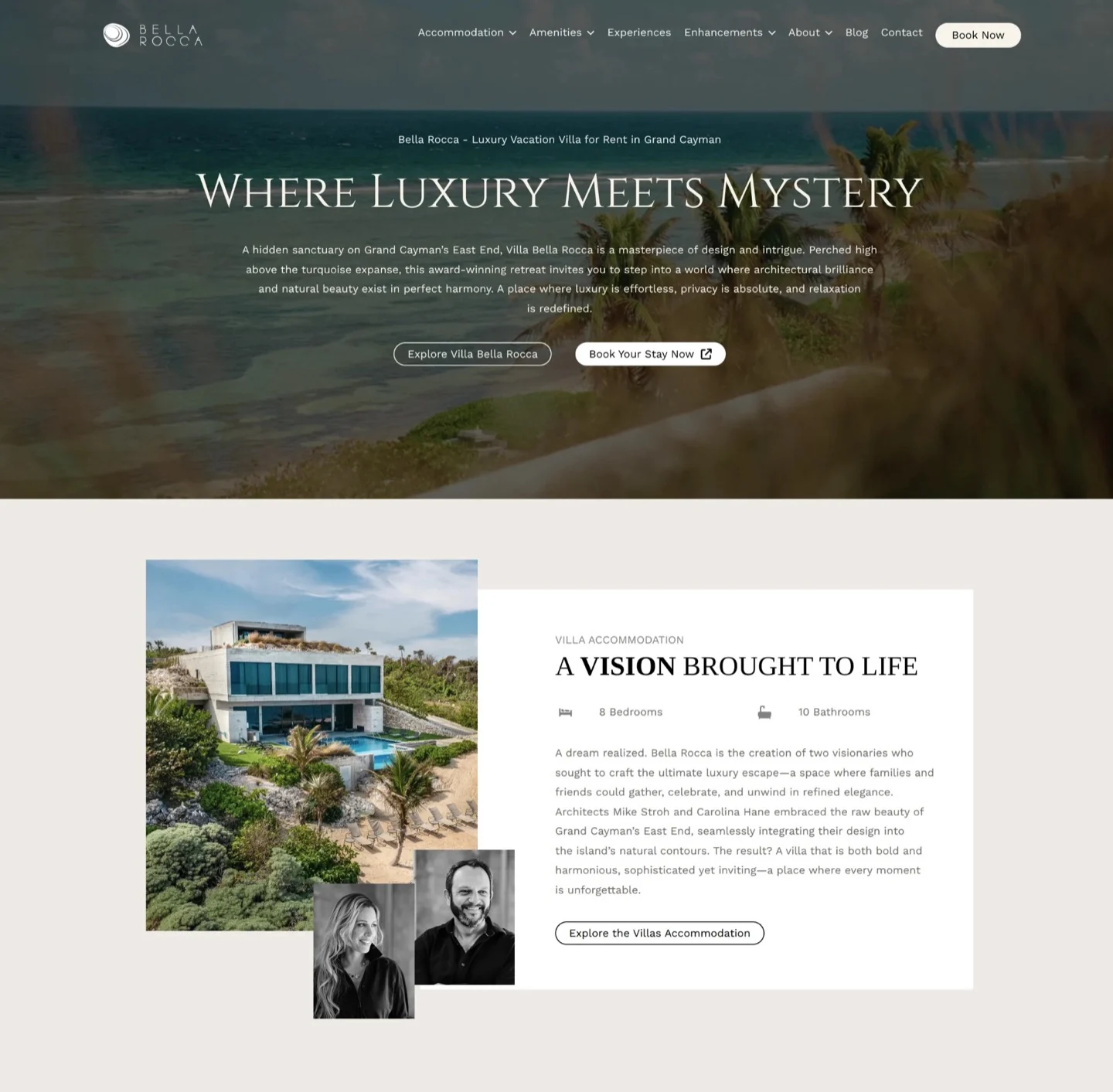
Room pages that do the selling
Guests compare room types before they compare rates. Each room type gets its own page with:
- its own photographs, not a shared gallery
- size, bed configuration, view and how many guests it sleeps
- what the rate includes, such as breakfast or parking
- a booking button that opens the booking engine on that room, where the engine supports it
Separate room pages also give search engines and ads a specific page to send people to. A search for a family room or a sea-facing suite should land on that room, not on a list of nine.
The booking engine handover
This is where many hotel websites lose guests. The hotel's site looks one way, then the guest clicks "Book now" and lands on a booking engine that looks and behaves differently, often on another web address.
Booking engines limit what a designer can change. Some accept your fonts, colours and logo. Some open inside your page and others send the guest away. We work with the engine you have and make the handover as clean as it allows: matched styling where possible, dates and room carried through, and a clear best-rate message before the click.
Whether tracking survives that handover also depends on the engine. Some pass booking values back to your analytics and ad accounts, some need extra setup and some do not support it. We test this before launch and tell you plainly what can and cannot be measured. If you are choosing an engine, our booking engines comparison covers what to ask.
Restaurant, spa, conferences and weddings
These are separate businesses inside the hotel. Each has its own audience and its own enquiry.
- Restaurant and bar menus as text on the page, not only as PDF files, with opening times and a way to reserve.
- Conferences and events venue capacities, layouts, equipment and a quote request form.
- Weddings what the venue offers, accommodation for guests and an enquiry form that asks for the date and numbers.
- Spa and activities treatments or experiences listed with enough detail to book.
Forms route to the department that answers them, so a wedding enquiry does not sit in the reservations inbox.
How we build it
Hotel sites need bookings, forms and regular content changes, so we usually build them on WordPress with Bricks Builder. We design desktop-down and build each layout to rescale to every screen size, and we keep photo-heavy pages quick on phones.
Every project starts with research into your guests, the searches they make and the hotels you compete with. The site is built on a staging server. When it replaces an old site, we redirect the old URLs so existing rankings and links are not thrown away. Tracking for bookings, enquiries and calls is set up at launch. A typical project takes about 6 to 8 weeks.
If you already have a site, we start with an audit and recommend a rebuild only if it needs one.
Who we work with
We work with independent hotels such as Karoo One, a hotel and farm stay in De Doorns, and Thanda Manzi, a country hotel in the Hennops River Valley in Gauteng. Clients deal directly with Ryan Cumming, the founder.
Next steps
A website is one part of winning direct bookings. Hotel SEO brings guests who have not heard of you yet, and Google Ads for hotels protects searches for your name. Our hospitality overview shows how the three fit together. To talk about your hotel, get in touch.
Clients in hospitality & luxury villas





Questions
Questions about Hotel Website Design
Can't see yours? Ask Ryan directly and you'll get a straight answer, usually the same day.
Ask on WhatsAppCan you work with the booking engine we already use?
Usually, yes. Most booking engines give a hotel a widget, an embedded booking page or a link for its own website. How closely it can match your site and how much it lets us carry through, such as dates and room type, depends on the engine. We review yours before we quote.
Will we be able to see which bookings came from the website?
That depends on the booking engine. Some pass completed bookings and their value back to analytics and ad accounts, some need extra setup and some do not support it. We test the tracking before launch and tell you what can be measured.
Does every room type need its own page?
We recommend it. Guests compare room types, and a dedicated page gives each one its own photographs, details and booking button. It also gives search engines and ads a specific page to send people to.
How long does a hotel website take to build?
A typical project takes about 6 to 8 weeks. Hotels with many room types, several departments or more than one language can take longer, and so can projects that are waiting on new photography or content.
Can you arrange photography and video?
Yes. We work with independent photographers and videographers where a project needs them, and scope that into the project. If you already have strong photography, we use it.
Can our team update specials, menus and photos?
Yes. The site is built so your team can change text, photos, menus and specials without a developer. Room rates and availability stay in your booking engine, so they only need to be updated in one place.
Start a project
Be the business they find first
Tell Ryan what you sell and who buys it. You'll get a straight answer on what's holding your website back and what to fix first. There's no obligation to go ahead.
More enquiries you can trace. You'll see which search, page or ad brought in each call, booking and form.
Higher in search results. On Google, in the map results and in AI answers, for the searches your customers make.
One person to talk to. Ryan answers on WhatsApp and sends a plain-language report on results every month.
