


Healthcare websites, SEO and Google Ads for clinics, specialists and health brands
Clinic Website Design
Clinic website design has to serve several practitioners, many treatments and a busy front desk at once. We design and build websites for multi-practitioner, aesthetic and wellness clinics, mostly on WordPress, so that each practitioner, treatment and location has its own page and your team can keep them current without a developer.
A clinic is not a single practice
A solo practitioner's website describes one person. A clinic's website describes a team that changes, a list of treatments that grows and sometimes more than one location. If those are typed into ordinary pages, the site is out of date within months.
We build clinic sites on structured content instead:
- Practitioners. Each practitioner is a record with a name, registered profession, qualifications, the treatments they offer and the days they consult. Their profile page and every mention of them on the site draw from that record.
- Treatments and services. Each has its own page, linked to the practitioners who offer it.
- Locations. Each branch has its own address, hours, contact details and map.
When someone joins or leaves, your team edits one record and the rest of the site follows. This is the main difference from the general approach on our medical website design page.
Why most clinic sites are built on WordPress
We choose the platform after the research stage, and for clinics it is mostly WordPress. Clinics usually need booking, several forms and staff who can update content themselves, and WordPress handles structured content like practitioner and treatment records well. We build new WordPress sites with Bricks Builder.
It depends on the use case. A small clinic with a handful of pages and no online booking may be better served by a lighter build, and we will say so.
Booking and the front desk
Booking in a clinic is rarely one process. One practitioner takes online bookings, another sees patients by referral only, and a third wants a consultation before any treatment is booked. We set the booking route per practitioner or per treatment, so patients are not sent down a path that does not apply to them.
Enquiries are routed to the right inbox or desk, and tracking is set up so you can see which treatments bring in calls, forms and bookings. Where your practice system offers an API or another established way to connect, we can link the website to it.
Aesthetic clinics
Aesthetic clinic websites have constraints that other clinics do not:
- Many aesthetic treatments use prescription-only medicines. Google restricts prescription drug terms in ads, landing pages and keywords, so how a treatment page is named and worded affects whether you can advertise it. We plan page wording with that in mind. See Google Ads for clinics and healthcare.
- Google classes invasive procedures, including cosmetic surgery and injections, as personal health content. Advertisers in that category cannot use their own audience lists, so remarketing to past website visitors is not available.
- Offers, guarantees and results claims need care. For practitioners registered with the HPCSA, the ethical rules prohibit touting, which they define as drawing attention to offers, guarantees or material benefits. How specials, packages and before-and-after images are used is a decision for the practice under its own regulator's rules.
Wellness clinics
Wellness clinics often combine registered health professions with services that are not regulated in the same way, such as classes or memberships. The site should make clear which services are clinical and who the registered practitioners are, and keep health claims to what can be supported. Timetables, class bookings and packages usually run through a booking system, which we link or integrate.
Who approves the wording
Clinical wording is never published on our say-so. Either the clinic supplies and approves it, or we research and write the copy and the clinic verifies and signs it off before it goes live. In a multi-practitioner clinic we agree at the start who signs off each section, because that is the step most likely to delay a launch.
This page is general information, not legal advice. We give guidelines only and make no warranty that a website will be compliant. Practitioners confirm the final rules with the HPCSA, their own regulator or their own legal counsel.
Who we work with
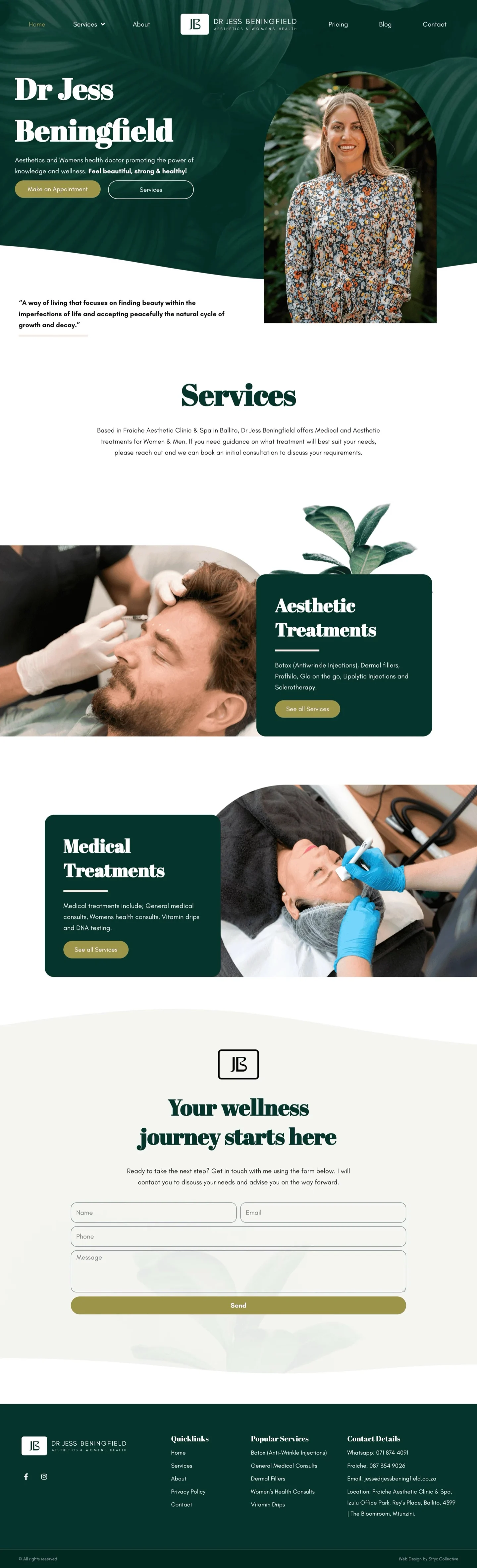
We work with Novo Clinic, a multi-specialty clinic in George Town, Grand Cayman; Legacy Med, which provides executive wellness medical assessments in Durban; Dr Jess Beningfield, an aesthetic medicine and women's health practice in Ballito; and MoveHQ, a biokinetics and Pilates studio in Durban North.
For our wider work in the sector, see the healthcare overview. To talk about your clinic's site, get in touch. Quotes follow an initial discussion.
Clients in healthcare & clinics







Questions
Questions about Clinic Website Design
Can't see yours? Ask Ryan directly and you'll get a straight answer, usually the same day.
Ask on WhatsAppWhich platform is best for a clinic website?
For most clinics we recommend WordPress, because clinics usually need booking, forms and staff who can update practitioners and treatments themselves. It depends on the use case, and a small clinic with a few pages and no online booking may suit a lighter build.
Can our reception team update the website?
Yes. Practitioners, treatments and locations are set up as structured records, so adding a new practitioner or changing consulting days is a matter of editing one record rather than redesigning pages.
Can different practitioners have different booking methods?
Yes. We set the booking route per practitioner or per treatment. One can take online bookings while another is referral-only or requires a consultation first.
Can an aesthetic clinic show before-and-after photos and special offers?
That is a decision for the clinic under its own regulator's rules. For HPCSA-registered practitioners, the ethical rules prohibit touting, which covers drawing attention to offers and guarantees. We flag these items during the build and the practitioner confirms the position with the HPCSA or their own counsel.
Who writes and approves the treatment pages?
Either the clinic supplies and approves the clinical wording, or we research and write it and the clinic verifies and signs it off before launch. Nothing clinical goes live without the clinic's sign-off.
Start a project
Be the business they find first
Tell Ryan what you sell and who buys it. You'll get a straight answer on what's holding your website back and what to fix first. There's no obligation to go ahead.
More enquiries you can trace. You'll see which search, page or ad brought in each call, booking and form.
Higher in search results. On Google, in the map results and in AI answers, for the searches your customers make.
One person to talk to. Ryan answers on WhatsApp and sends a plain-language report on results every month.
