


Healthcare websites, SEO and Google Ads for clinics, specialists and health brands
Medical Website Design
Medical website design is the work of building a site that tells patients who you are, what you treat and how to book, in wording your profession's rules allow. We design and build medical websites for practices, clinics and health brands, with booking, accessibility and privacy planned from the start, not added at the end.
What makes a medical website different
A medical website carries three things most business websites do not. The wording is clinical, and a registered professional answers for it. Enquiries often contain health information. And the visitors may be unwell, anxious, older or using assistive technology. Each of these changes how we plan, write and build.
This page covers how we handle those three things. For the wider picture of our work in the sector, see our healthcare overview.
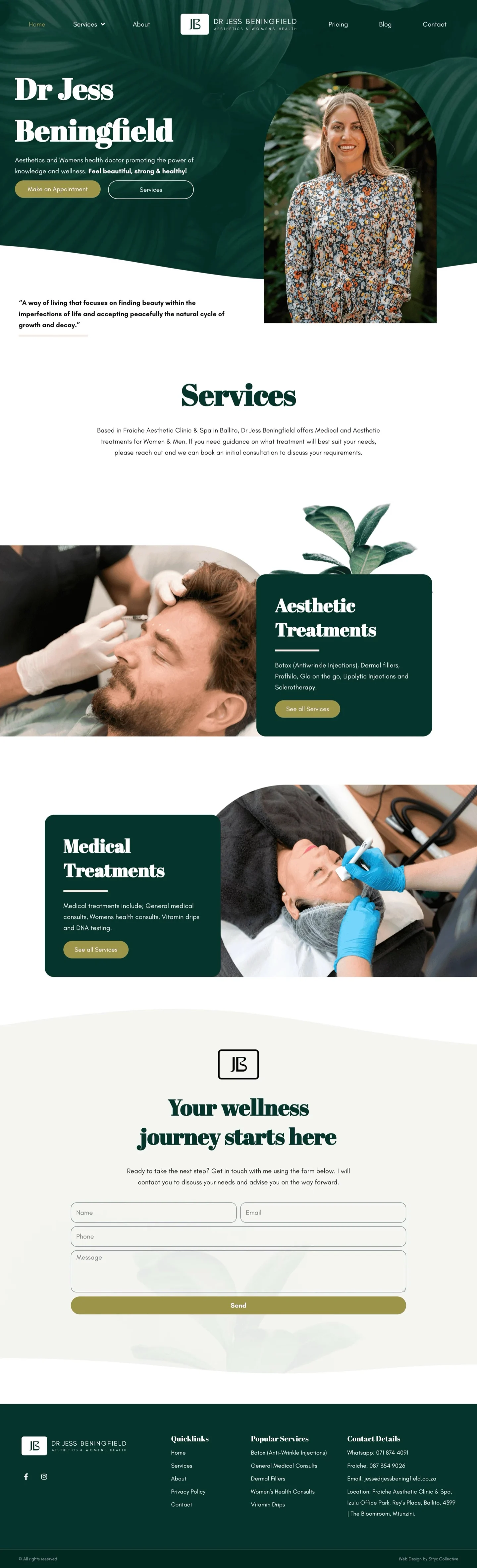
How a medical website project runs
- Research. We look at your goals, your patients, the terms they search for, competing practices and the gaps in your current content.
- Structure. We plan one page per topic: each service, condition and practitioner that deserves its own page gets one.
- Copy. Either the practice supplies and approves the clinical wording, or we research and write it and you verify and sign it off. Nothing clinical goes live without that sign-off.
- Design and build. We design desktop-down and build the site to rescale to every screen size, on a staging server you can review.
- Launch. Old URLs are redirected, and tracking for enquiries, calls and bookings is set up on day one.
A typical project takes about 6 to 8 weeks, and you follow progress in a client portal.
Booking
There are three practical routes, and most practices use more than one:
- Online booking through your practice management or booking system, linked or embedded in the site.
- A booking request form that goes to reception, who confirm the time.
- Click-to-call and WhatsApp for patients who would rather talk to a person.
Which route fits depends on the system you already use. We can connect a website to almost any system that offers an API or another established way to connect. Where booking happens in a separate tool, how much of the patient's journey can be tracked depends on that tool.
We keep enquiry forms short on purpose. Every health detail a form collects has to be stored and protected, so we ask only for what reception needs to respond.
Accessibility
The reference standard is the W3C's Web Content Accessibility Guidelines. The current version is WCAG 2.2, with three conformance levels: A, AA and AAA. We use it as our reference for the things that matter most on a medical site:
- Text contrast and a readable type size.
- Navigation that works by keyboard as well as by mouse or touch.
- Form fields with proper labels and clear error messages.
- Text alternatives for images, and captions where there is video.
Accessibility laws differ by country. We give guidelines and build with them in mind, but we make no warranty of legal compliance.
Privacy and patient data
In South Africa, POPIA lists information about a person's health as special personal information, which may be processed only under stricter conditions. The Information Regulator publishes the guidance. Your practice is the responsible party. Where we host and maintain the site, we act as your operator, and the operator agreement is part of our service agreement.
In practice this means planning three things before the build: what each form collects, where submissions are stored and who receives them, and what analytics and advertising tools are allowed to see.
Practices with patients in the UK or Europe have GDPR to consider. In the United States, HIPAA applies to covered entities and their business associates. We can build to HIPAA requirements where they apply, usually at extra cost because of the added infrastructure.
Advertising rules
A practice website is advertising. In South Africa, the HPCSA's ethical rules allow practitioners to advertise, provided the advertising is not unprofessional, untruthful, deceptive or misleading and does not cause unwarranted anxiety about health. The same rules prohibit canvassing and touting for patients.
We write factual copy and flag anything that needs your decision.
This is general information, not legal advice. We give guidelines only and make no warranty that a website will be compliant. The practitioner confirms the final rules with the HPCSA, their own regulator or their own legal counsel.
Platform
We choose the platform to fit the practice. WordPress is usual when the site needs bookings and forms, and we build new WordPress sites with Bricks Builder. A simpler information site can be built with Astro on Cloudflare.
Next steps
The build differs by practice type. See clinic website design for multi-practitioner clinics and websites for doctors and specialists for individual practitioners. To talk through your own site, get in touch. Quotes follow an initial discussion.
Clients in healthcare & clinics







Questions
Questions about Medical Website Design
Can't see yours? Ask Ryan directly and you'll get a straight answer, usually the same day.
Ask on WhatsAppWhat should a medical website include?
At minimum: who the practitioners are and their registered qualifications, what you treat, where you are and when you are open, and a clear way to book. Beyond that, a page for each main service or condition, new patient information and a privacy notice that matches how the site handles data.
Who writes the clinical content?
There are two routes. The practice supplies and approves the clinical wording, or we research and write it and the practice verifies and signs it off before it goes live. Either way, nothing clinical is published without sign-off from the practice.
Will my medical website be HPCSA compliant?
We give guidelines based on the HPCSA's published ethical rules and flag wording that needs your decision, but we make no warranty of compliance. The practitioner remains responsible and confirms the final rules with the HPCSA or their own legal counsel.
Can you build a HIPAA-ready website?
We can build to HIPAA requirements where they apply to a practice. It usually costs more because of the added infrastructure. Whether HIPAA applies to you is a question for your own legal counsel.
Which platform do you use for medical websites?
It depends on what the site has to do. WordPress is usual when a site needs bookings and forms, and we build new WordPress sites with Bricks Builder. A simpler information site can be built with Astro on Cloudflare.
How long does a medical website take to build?
A typical project takes about 6 to 8 weeks. The step that most often sets the pace is content sign-off, because clinical wording has to be checked by the practice before launch.
Start a project
Be the business they find first
Tell Ryan what you sell and who buys it. You'll get a straight answer on what's holding your website back and what to fix first. There's no obligation to go ahead.
More enquiries you can trace. You'll see which search, page or ad brought in each call, booking and form.
Higher in search results. On Google, in the map results and in AI answers, for the searches your customers make.
One person to talk to. Ryan answers on WhatsApp and sends a plain-language report on results every month.
